
Honor Against Expediency
The Three MusketeersThis flow traces the recurring conflict between the characters' honor code and the political world of bargains and calculated violence.
increasing Bearing strength in each event
 decreasing
Bearing strength in each eventdecreasingFather's Counsel

Honor as Inheritance
Moral Instruction
D'Artagnan's father teaches him to endure nothing from anyone except the King, the Cardinal, and M. de Treville.
Risky Simplicity
The code gives him courage but not subtlety. It must later be refined by experience.
Athos's Generosity

Honor Beyond Possession
Open Purse
Athos lends freely while refusing to borrow, preserving dignity despite gambling losses and concealed poverty.
Social Principle
For him, generosity is not performance. It is the remaining proof of an identity that circumstances have stripped away.
Buckingham's Purse
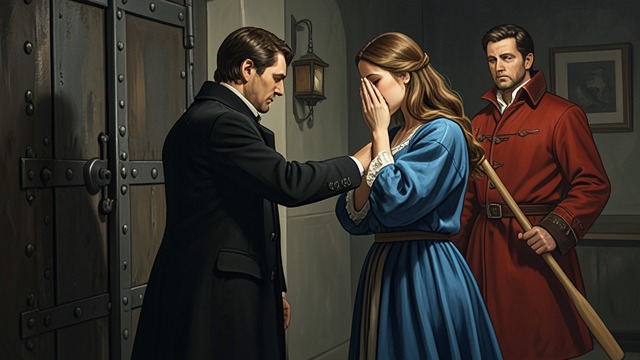
Service Without Payment
Offered Reward
Buckingham tries to compensate d'Artagnan for the journey and the danger.
Refusal of Mercenary Meaning
D'Artagnan insists that he served the Queen and Constance, not Buckingham. Honor separates service from purchase.
The Safe-Conduct

Honor as Leverage
A Written Exception
Athos takes Richelieu's signed authorization from Milady.
Political Contradiction
The Musketeers use an instrument of state violence to defend themselves from state violence. Honor survives by exploiting the system's own language.
Pardons Before Death

Mercy at the Limit
Individual Pardons
Athos, Lord de Winter, and d'Artagnan each forgive Milady for a different injury.
No Legal Restoration
Pardon does not mean release. Their compassion acknowledges humanity while their judgment accepts responsibility for death.
before d'Artagnan leaves Bearn
during the early poverty
after the London mission
at the Red Dovecot
the execution on the Lys
